Turning Tasting Reservations Into Sales
Online booking has changed the tasting room. Guests reserve a time, show up expecting a great experience, and leave, sometimes with a case, sometimes with nothing. The difference is rarely the wine. It’s how the visit is set up before, during and after. Here are six ways to turn reservations into revenue.
1. Take payment when they book
No-shows cost you a seat you could have sold. Charging for the tasting at the time of booking cuts no-shows and puts money in the bank before the guest arrives. Guests who have paid also tend to arrive on time, because they have something to lose.
Many producers credit the tasting fee against a bottle purchase, which turns the fee into a reason to buy. A guest with a $25 credit is far more likely to leave with a bottle than a guest who paid nothing.
Set a clear cancellation policy, such as a full refund up to 48 hours before the visit, and put it on the booking page and in the confirmation email. Clear rules prevent awkward conversations at the bar.
2. Offer more than one kind of experience
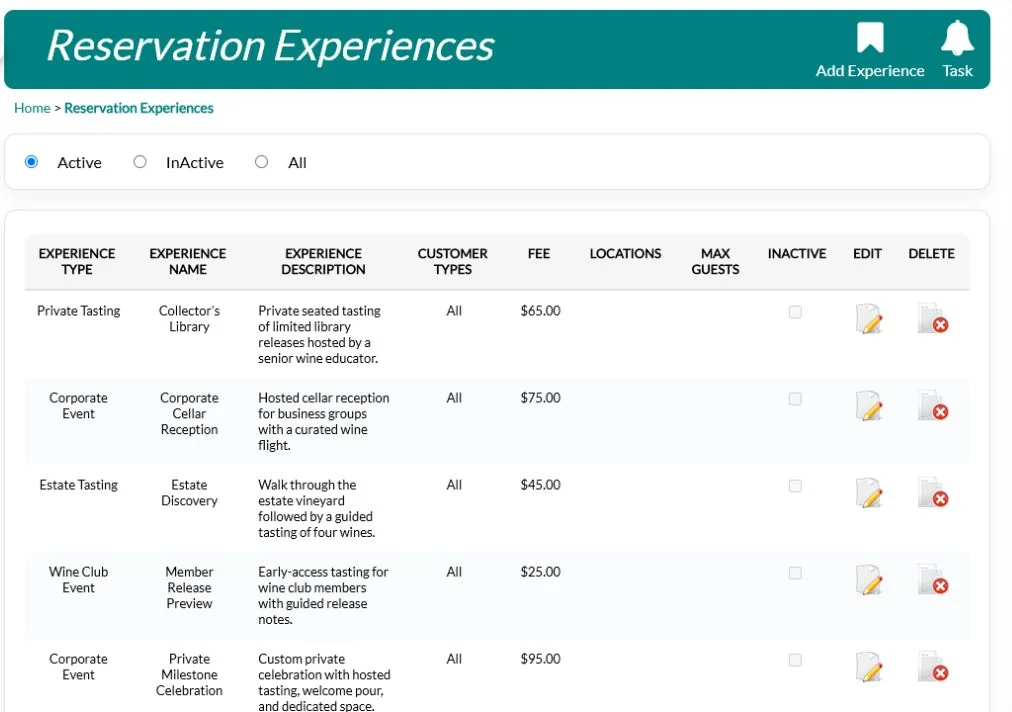
A standard tasting, a reserve flight, a vineyard or brewhouse tour, a food pairing: different experiences attract different guests and different spend. A couple on a day trip wants something different from a group celebrating a birthday, or a collector looking for library wines.
Set a capacity for each experience so your team isn’t overwhelmed and every guest gets proper attention. Keep premium experiences for selected guests, such as club members or trade, as a perk that gives people a reason to join.
Review the menu every season. If one experience always sells out and another rarely books, change the price, the times or the experience itself.
3. Share booking links everywhere
Put a booking link on your website, in your emails and on social media, and print a QR code for your tasting bar, menus and shop. Guests who enjoyed their visit often book the next one, or book for friends, before they leave.
Separate links for each experience let you see which channel fills which seats. If most reserve-flight bookings come from your newsletter, you know where to promote it. Don’t forget partners: hotels, tour operators and local tourism websites can send you guests if you give them a simple link.
4. Know who’s coming before they arrive
When a booking is attached to a customer record, your team can see whether the guest is a club member, a past buyer or a first-time visitor. A returning member deserves a different welcome, and different pricing, from a first-timer.
Look at the day’s bookings before you open. Note birthdays, anniversaries, large groups and guests with dietary needs, and decide who will look after them. A host who greets a member by name and remembers what they bought last time makes a lasting impression.
For first-time visitors, plan how you’ll introduce the club. The best moment is usually mid-tasting, when the guest is enjoying a wine, not at the till.
5. Connect the booking to the sale
The most common gap: the reservation lives in one system and the sale in another. Staff check guests in on one screen, ring up bottles on another, and nobody can tell later which bookings turned into sales.
When the booking flows into your POS, staff check the guest in, add bottles to the same bill, apply member pricing, and close it out in one step. The table is released for the next booking, and the purchase is linked to the guest’s record.
That link makes the rest possible: you can see average spend per booking, which experiences lead to the biggest purchases, and which hosts turn tastings into sales.
6. Follow up while the visit is fresh
The day after a visit is the best time to ask for a club sign-up or a review. Guests still remember the view, the wine and the person who poured it.
Because the booking, the purchase and the customer are linked, you can tailor the follow-up:
- Guests who bought: a thank-you, notes on what they took home, and an invitation to join the club.
- Guests who didn’t buy: a friendly note with an online-shop offer on the wines they tasted.
- Club members: a reminder of their next release or members’ event.
- Everyone: a short request for a review.
Keep it short and personal. One well-timed email works better than a long series.
The result
Reservations stop being just a calendar. They become the start of a customer relationship: a paid visit, a bigger sale, a club member, and a guest who comes back.
A sample experience menu
A simple three-tier menu gives guests a choice and lifts average spend:
| Experience | Length | Capacity | Who it’s for |
|---|---|---|---|
| Classic tasting | 45 minutes | 8 per slot | First-time visitors, walk-in alternative |
| Reserve tasting | 75 minutes | 6 per slot | Returning guests, special occasions |
| Members’ experience | 90 minutes | 4 per slot | Club members only (restricted) |
Price the tiers so the step up feels worthwhile, and credit part of the fee toward bottles on the higher tiers.
Common mistakes with tasting reservations
- Too many slots, too little staff. Overbooking ruins the experience you’re charging for. Set capacity by how many guests your team can actually host well.
- No reminder before the visit. A reminder the day before cuts no-shows and gives guests a chance to reschedule instead of skipping.
- Bookings that never reach the sale. If the reservation and the purchase live in different systems, you’ll never know which experiences actually sell wine.
- Treating every guest the same. A club member and a first-timer need different welcomes, different pricing and different follow-up.
Reservation FAQs
Should I charge for tastings at booking?
Charging up front reduces no-shows. Many producers credit the fee against a purchase, so committed buyers effectively taste for free.
How far ahead should guests be able to book?
Two to four weeks suits most tasting rooms. Open popular dates like long weekends and holidays further ahead.
Can I still take walk-ins?
Yes. Keep some capacity unbooked for walk-ins, especially on weekdays, and adjust as you learn your patterns.
What to measure
Track a few numbers each month to see whether reservations are paying off: bookings by experience, no-show rate, average spend per booked guest compared with walk-ins, and how many booked guests joined the club within 30 days. If one experience books well but sells little, change the format, the price or what’s poured, rather than dropping it straight away. Small changes, like ending a tasting at the shop counter instead of the table, often lift sales more than new experiences do.
How QUALO helps
QUALO lets you publish tastings and experiences with set capacity, share them by link or QR code, restrict special experiences to selected guests, and take payment when guests book. On the day, the booking flows straight into the POS, where member pricing applies automatically and the visit checks out in one step. Every booking and sale is linked to the customer record, ready for your next email campaign.
See E-commerce & Reservations · Book a demo