Year-End Inventory Counts: A Step-by-Step Guide for Craft Producers
The year-end count is the one day everyone dreads: every bottle, can and keg in every location, counted by hand and matched to the books. Done well, it gives your accountant numbers they can trust and shows you exactly where stock goes missing. Done badly, it eats a weekend and still doesn’t add up. Here’s how to make it painless.
Two weeks before: get ready
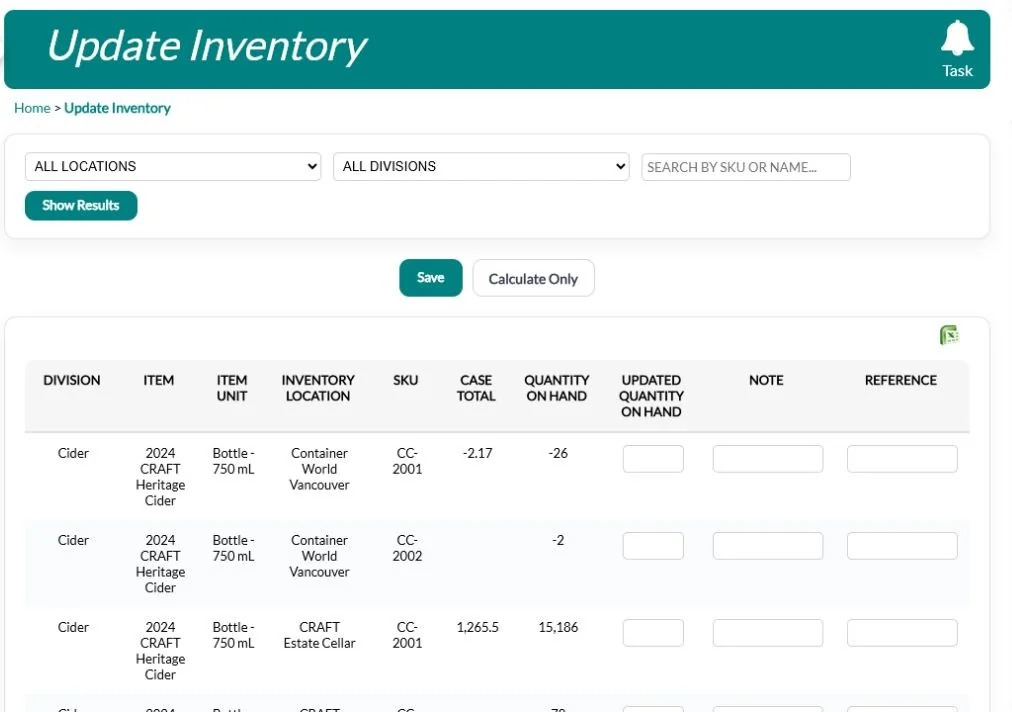
A good count is mostly preparation. The more you sort out before count day, the faster the count goes and the fewer surprises you find afterwards.
- Pick the date and freeze it. Choose a day when sales are quiet, and tell the team that no transfers move between locations that day.
- Clean up open transactions. Receive any transfers still in transit, post supplier deliveries, and finish open orders, so the system is current before you count.
- List every location. Cellar, tasting room or taproom, back stock, off-site storage and third-party warehouses. A location you forget is stock that disappears on paper.
- Prepare count sheets by location, sorted the way the shelves are laid out, not alphabetically.
- Tidy the shelves. Combine part-cases, label anything unmarked, and move damaged stock to one spot so it can be counted and written off.
- Book the team. Decide who counts which area, and brief everyone on how the count will work.
Ask your accountant what they need from the count, and when. Some want a valuation at a specific date; others want the count sheets themselves. Knowing in advance saves a second round of work in January.
Count day: count first, compare later
On the day, the goal is an accurate count, not a fast one. Mistakes made now take far longer to fix later.
- Count in pairs. One person counts, one records. Swap halfway through to keep fresh eyes.
- Count what’s there, not what should be there. Counters shouldn’t see the system quantity; it biases the count.
- Count full cases and singles separately, then total them. Mixed-up cases are the top source of errors.
- Open any case that looks light or has been taped back up. A case on the shelf isn’t always a full case.
- Tag counted areas with a sticker or note so nothing is counted twice.
- Pause sales or count around them. If the tasting room is open, record sales made during the count so you can adjust.
Don’t forget stock that isn’t on a shelf: samples in the office, bottles in the staff fridge, product at events, and kegs out with accounts.
After the count: deal with variances
Enter the counts and compare them to the system. Every product will fall into one of three groups:
- Matches. No action needed.
- Small variances. Breakage, samples or pours not recorded. Adjust, and note the reason.
- Large variances. Recount these before adjusting. A big gap is usually a miscount, a missed location, or a transfer that was never received.
Do the recounts the same day or the next morning, before anything moves. A recount a week later is a guess.
Record a reason for every adjustment. Next year, those reasons tell you where your process leaks: unrecorded samples, breakage in transit, or a location nobody checks. If the same product is short every year, look at how it’s sold and poured, not just how it’s counted.
Close the books
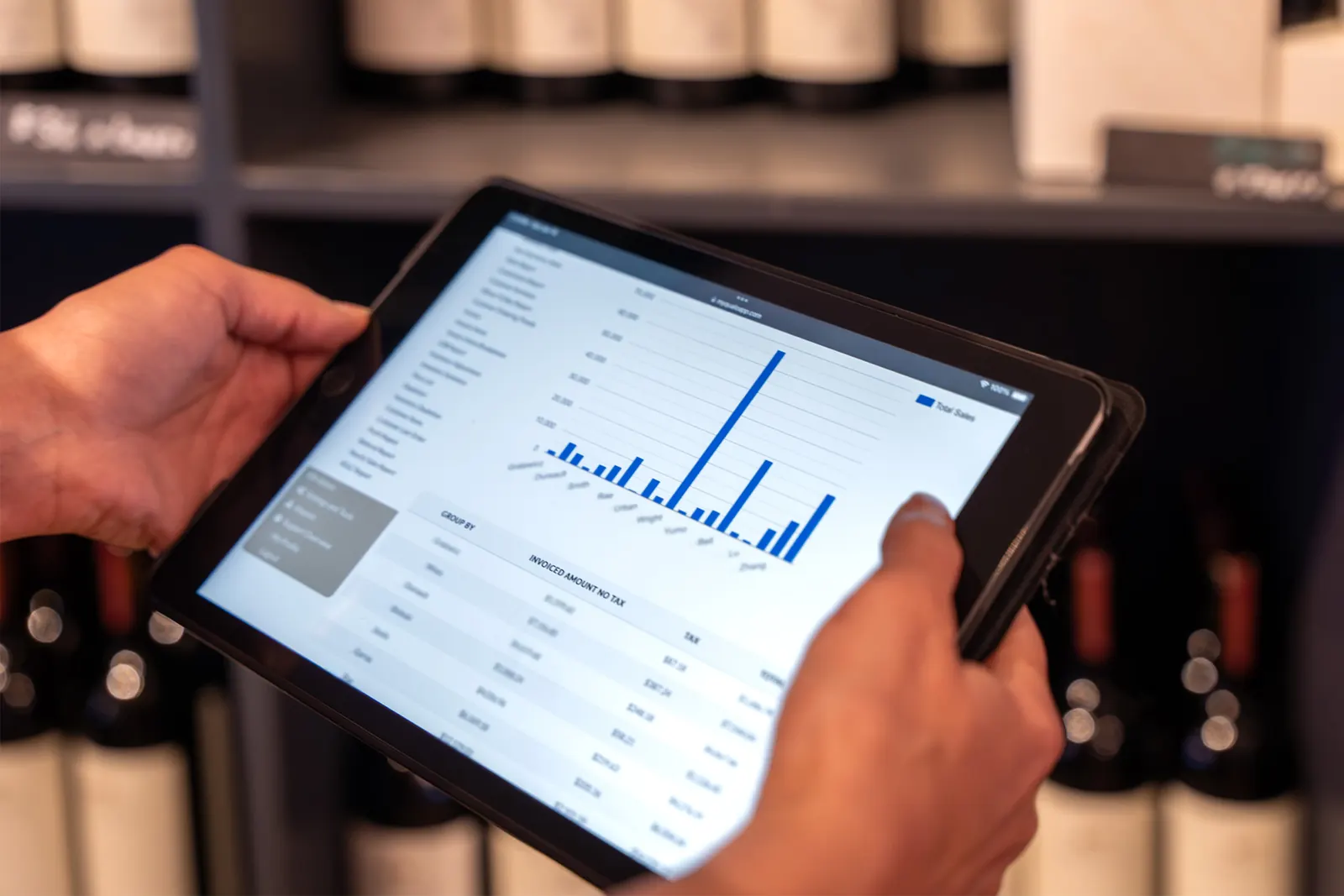
Once adjustments are posted, run an inventory valuation as of the count date for your accountant, and a depletion report to see what moved during the year. Compare the valuation with last year’s: a big change in total value should have a clear explanation, such as a large bottling run or a price change.
Keep the count sheets, the list of adjustments and their reasons, and the valuation report together with your year-end records. If questions come up later, from your accountant or anyone else, you’ll have the answers in one place.
Make next year easier
The best way to shrink the year-end count is to count a little all year. Pick one location or product category each month and run a short cycle count. By December there are no surprises, and the year-end count becomes a check rather than a hunt.
Start with the items that matter most: high-value products, fast sellers, and anything that went missing last year. Count those more often than slow, low-value stock. Over time you’ll learn which habits cause variances, such as unrecorded samples or transfers never received, and you can fix them at the source.
A worked example: finding a 14-case gap
Say your system shows 140 cases of your flagship white across all locations, and the count finds 126. Before writing off 14 cases, work through the likely causes in order:
- Recount the biggest location. Most gaps are counting errors in the place with the most stock.
- Check transfers. A transfer sent from the warehouse but never received in the tasting room shows as missing in one place and not yet arrived in the other.
- Check unrecorded movements. Samples for trade visits, bottles opened for tastings, and breakage all leave without a sale.
- Check recent sales and returns. A return processed to the wrong location, or a sale entered against the wrong size, shifts stock between items.
In practice, a gap like this is usually a mix: an unreceived transfer, some unrecorded tasting bottles, and a short count. Adjust what remains, with a reason for each part.
Common year-end count mistakes
- Counting while transfers are moving. Stock in transit gets counted twice or not at all.
- Letting counters see expected quantities. People find what they expect to find.
- Forgetting off-site stock. Third-party warehouses, consignment and event stock all count.
- Adjusting without reasons. Next year you’ll have no idea why stock went missing.
- Leaving it to one person. A tired solo counter makes mistakes. Pairs are faster and more accurate.
Inventory count FAQs
How often should we count?
A full count once a year, plus monthly cycle counts of one location or category. High-value or fast-moving items can be cycle-counted more often.
Should we close the tasting room to count?
Not necessarily. Count back stock first, then the tasting room after closing, or record sales made during the count so you can adjust.
What’s an acceptable variance?
It depends on your business, but the trend matters more than any single number. A variance that grows every year points to a process problem worth fixing.
How QUALO helps
QUALO tracks stock by item, size and location in real time, including in-transit transfers and third-party warehouses. Physical counts show variances against the system, every adjustment is recorded with full history, and Inventory Summary, Adjustment, Depletion and Valuation reports are ready for your accountant.
See Inventory Management · Book a demo